What Is an MVP and Why Startups Should Build One First
Minimum Viable Product (MVP): A Founder’s Guide to Validating Startup Ideas
Did you know that 42% of startups fail because they build something the market doesn’t actually need? Many founders waste years and thousands of dollars chasing a “perfect” idea that nobody wants to buy. A great idea is the foundation of every startup, but turning it into a full product without early validation increases risk and cost. This is where an MVP comes in.
What Is an MVP?
MVP stands for Minimum Viable Product. It is the simplest, most basic version of your product that still solves a core problem for your users. It is not a half-baked idea; it must be functional enough to satisfy early customers and provide a high-quality experience. The goal is to collect the maximum amount of learning about your customers with the least amount of effort.
To get it right, your MVP needs three balanced elements:
- Minimum: Stripping away everything except the most essential features.
- Viable: Ensuring the product actually works and provides real value to users.
- Product: Delivering something tangible that people can use and interact with right now.
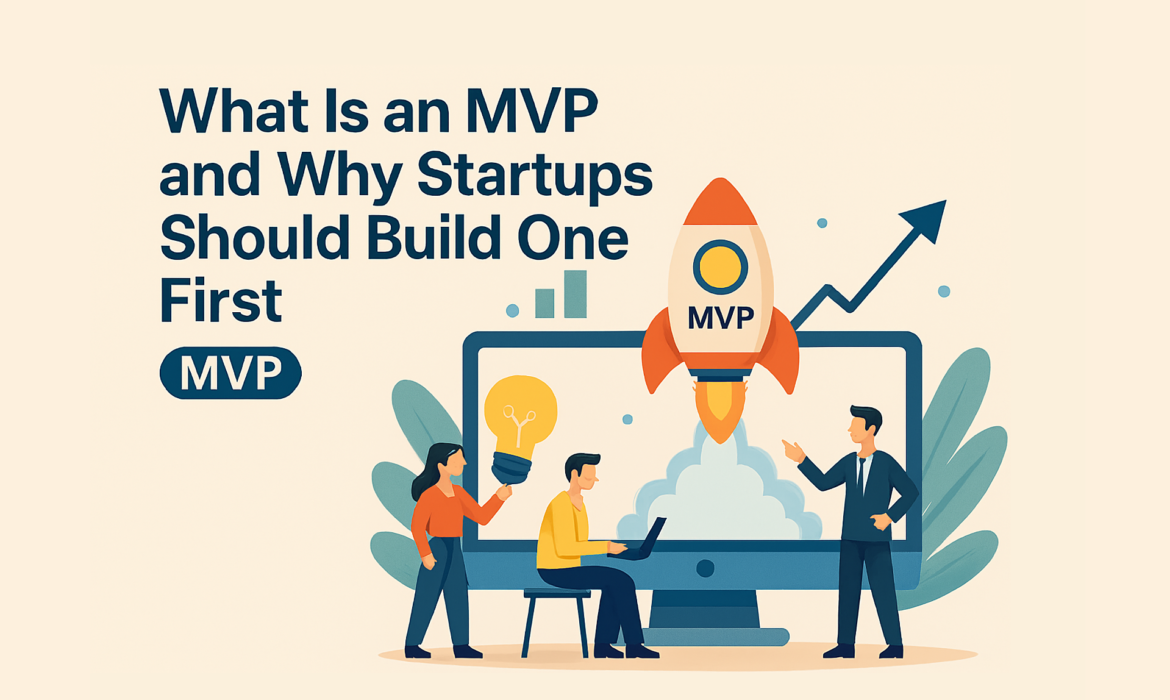
An MVP is not a rough prototype or a half-built product. It is a functional product designed to deliver value to early users and collect real feedback to validate assumptions. The goal of an MVP is learning, not perfection. An MVP helps startups test their idea, understand users, and make smarter decisions before investing heavily in development.
MVP vs. Prototype vs. PoC: What’s the Difference?
People often confuse these terms, but they serve very different purposes in your journey.
- Proof of Concept (PoC): A small tech experiment to see if an idea is technically possible to build.
- Prototype: A visual, often clickable model used for internal reviews or showing investors; not for real users.
- MVP: A live, working product launched to the market to test if people actually want to buy it.
Why Your Startup Needs an MVP First
Building an MVP is about launching smart, not just launching small. It allows you to validate your business idea in the real world before committing a large budget to full-scale development. This strategy turns your product into a learning tool rather than a gamble.
Key benefits include:
- Validate the Idea Early: An MVP allows you to test whether users actually need your solution before committing to full-scale development.
- Cost Savings: It is much cheaper to build a basic version than a feature-heavy product.
- Speed: You can launch in weeks (ideally 6–12 weeks) and beat competitors to the market.
- Real Data: You get feedback from real users, helping you decide which features to build next.
- Lower Risk: If the idea fails, you lose a little; if you build the full product first and it fails, you lose everything.
- Attract Investors: Investors prefer startups with validated ideas. An MVP demonstrates market potential, making fundraising conversations stronger.
Real-World Giants That Started Simple
Some of the most successful companies in the world began as very basic MVPs.
- Amazon: Started as a simple online bookstore run out of a garage to test if people would buy books online.
- Airbnb: The founders rented out air mattresses in their own apartment via a basic website to see if strangers would pay to stay in a home.
- Uber: Originally an iPhone-only SMS service called “UberCab” that allowed users to text for a taxi in San Francisco.
Types of MVPs You Can Build
You don’t always need complex code to test your idea; there are several ways to start.
- Landing Page MVP: A simple webpage that explains your product to see how many people sign up.
- Wizard of Oz MVP: The front looks automated, but a human is manually doing the work behind the scenes.
- Concierge MVP: You manually provide the service to a small group of people to learn their needs deeply.
- Single-Featured MVP: You focus on just one core function and perfect it before adding anything else.
Practical Tips for a Successful Launch
Building an MVP requires you to prioritize ruthlessly and focus on solving one core problem. You should use the MoSCoW method to categorize features into: Must-have, Should-have, Could-have, and Won’t-have. Once live, you must set clear KPIs, such as sign-up rates or user retention, to measure your success.
Common Mistakes to Avoid
Many startups fall into the trap of “feature creep,” where they keep adding bells and whistles and never actually launch. Another mistake is ignoring user feedback; if your early users are telling you something is wrong, you must be willing to pivot. Finally, building for everyone instead of a narrow niche often leads to a product that satisfies no one.
Build Your Future with Tech Nurture
At Tech Nurture, we don’t just build software; we build foundations for growth. Our experienced team specializes in MVP Development Services, delivering reliable, efficient, and scalable products that help you validate your idea fast. Whether you need a high-converting website or a feature-rich mobile app, we provide end-to-end development tailored to your startup’s unique needs. Let us handle the technical complexity so you can focus on winning the market with a product your users will love.

